
This time of year, the dining room is the center of the house. Thanksgiving, holiday dinners, and long, hopeful laughter filled times with friends and family all happen around the table. Yet the dining room is often the most overlooked room in the house. It gets furnished once and then left alone. This month I'm sharing the things I think about when designing a dining room, so yours feels inviting every time you sit down and hopefully will make you want to have more events in your room besides just the holidays.
Be brave with color
The dining room is one of the best places in the home to take a risk with color. You mostly use it in the evening, by lamplight or candlelight, and you don't spend all day there, so a bold shade feels dramatic and fun instead of overwhelming. Deep greens, rich reds, moody blues, and even a confident pink can make a dinner feel like an occasion. If a painted wall feels like too big a leap, try wallpaper, an interesting ceiling, or colorful upholstered chairs.
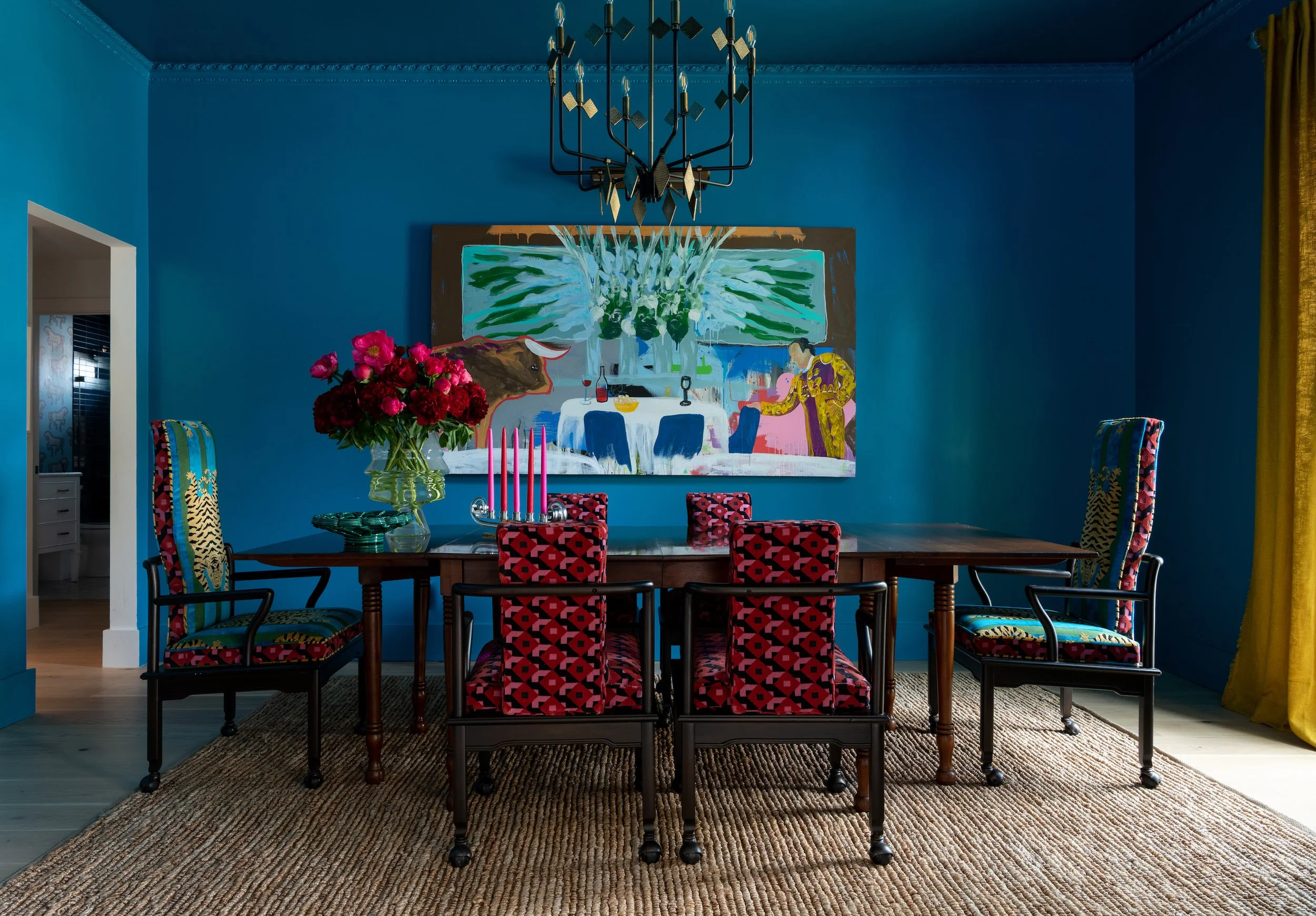
Moody blue walls create a canvas for this conversation invoking art.
Get the lighting right
Lighting sets the mood more than anything else in a dining room. A few guidelines I follow:
Hang your chandelier or pendant about 30 to 36 inches above the tabletop. Too high and it floats away from the table; too low and it blocks the view across the table.
Choose a fixture roughly half to two-thirds the width of your table.
Always put it on a dimmer. Bright light is good for homework and puzzles, and soft light is good for dinner parties.
Give everyone room
A beautiful dining room still has to work. Plan for about 24 inches of table width per person so no one is bumping elbows. Leave at least 36 inches between the table edge and the wall or furniture, and 42 to 48 inches if it's a main walkway, so guests can pull out their chairs and walk behind seated diners. If you entertain a crowd only a few times a year, an extendable table gives you that flexibility without overwhelming the room the rest of the year.
Choose a rug that works with your chairs
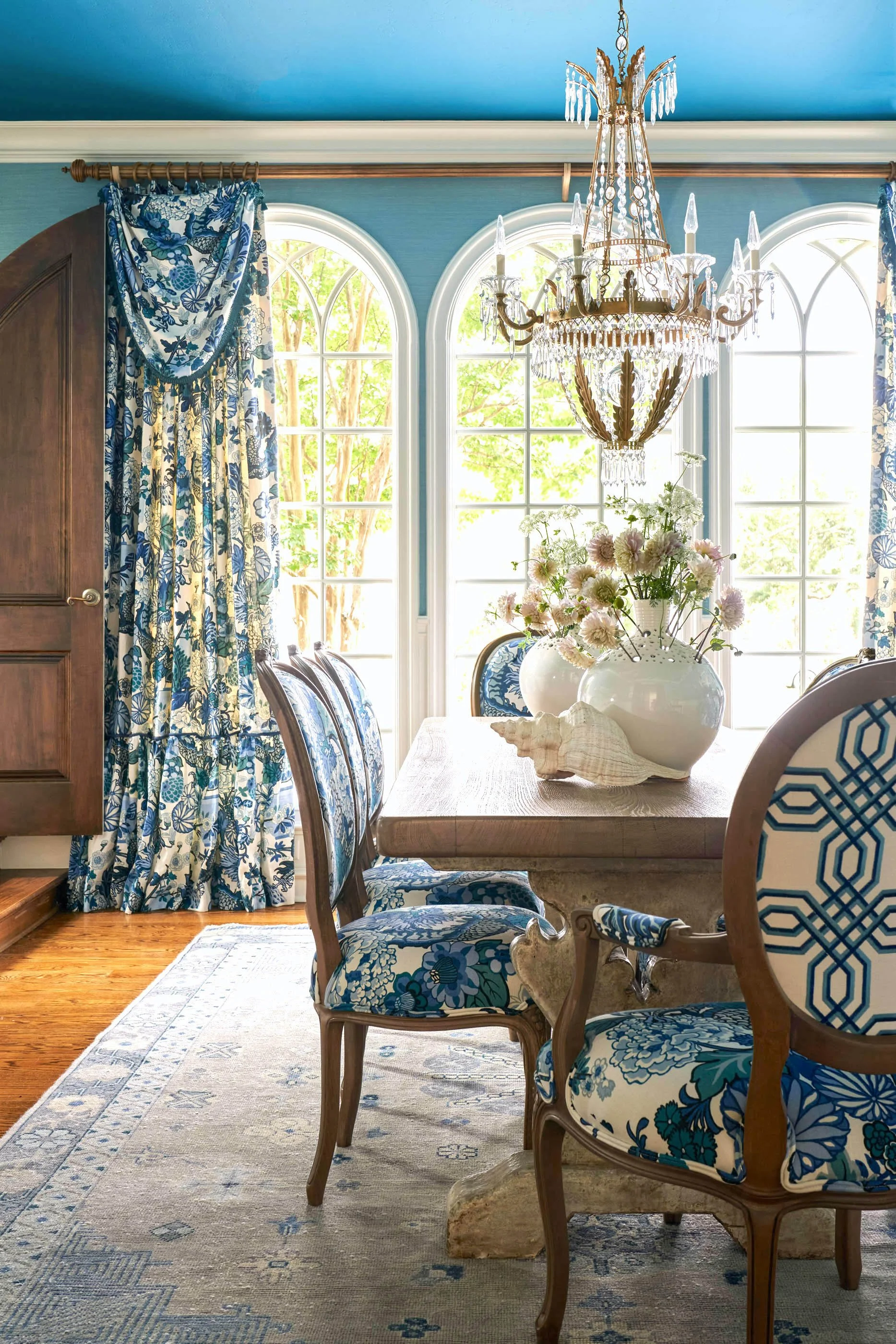
A rug adds softness and absorbs sound, which helps a lot when the conversation gets lively. Make sure it extends at least 24 inches beyond the table on every side so chair legs stay on the rug when people sit down and push back. Flat weaves and low-pile rugs are the easiest to clean and to slide chairs across. Patterned rugs are a great choice here because they hide the inevitable spills. This particular rug is a custom cow hide rug that we designed to go with these whimsical tulip chandelier the client already had installed prior to starting their dining room project.
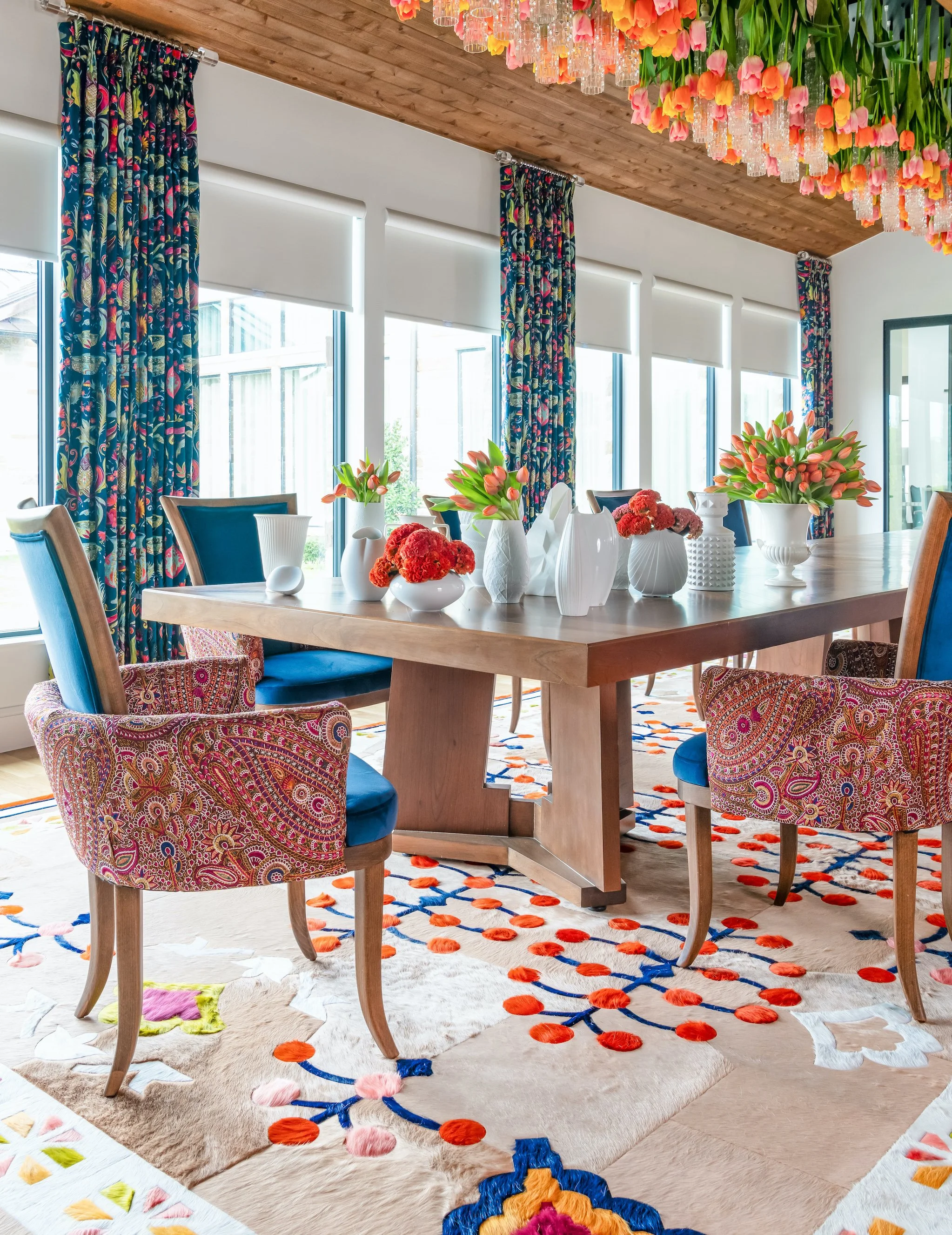
This rug works WITH the light fixture and doesn’t take away from or fight with a very whimsical, statement piece.
Make comfort a priority
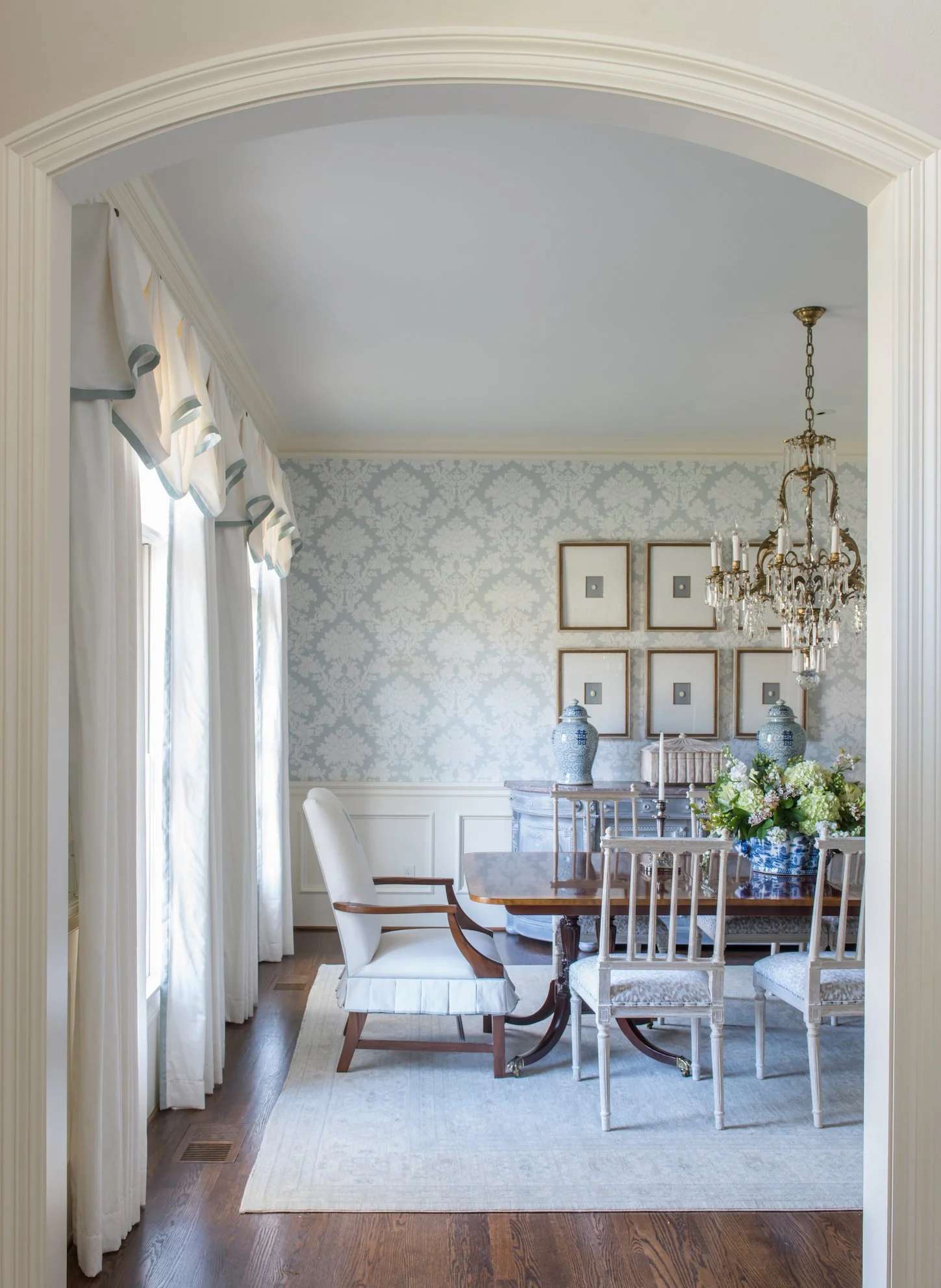
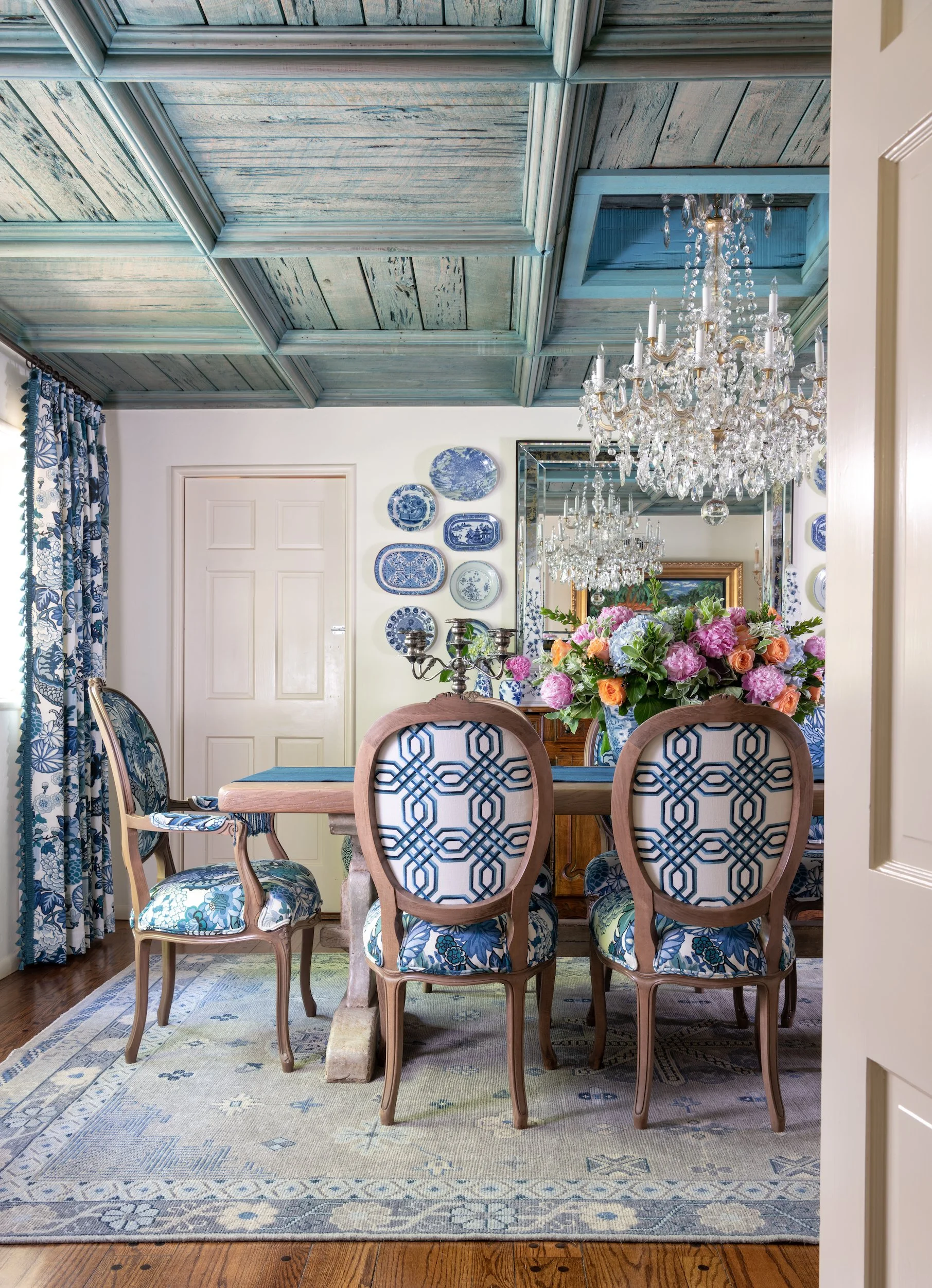
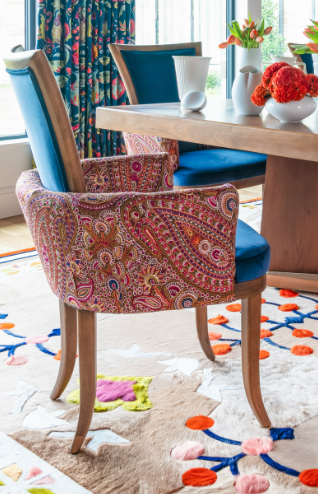
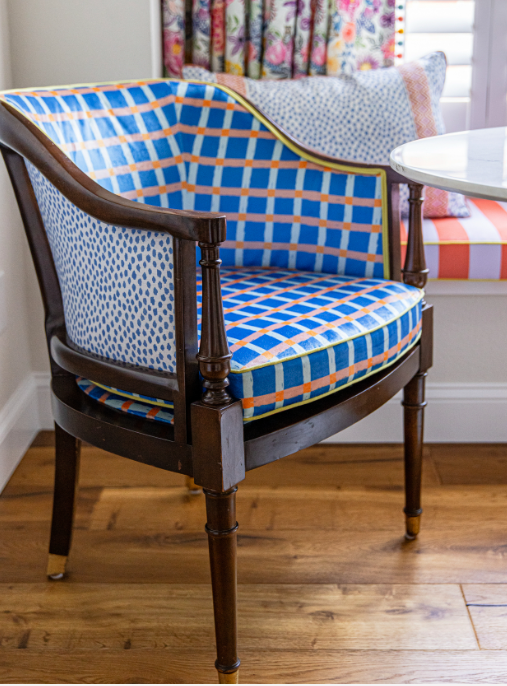
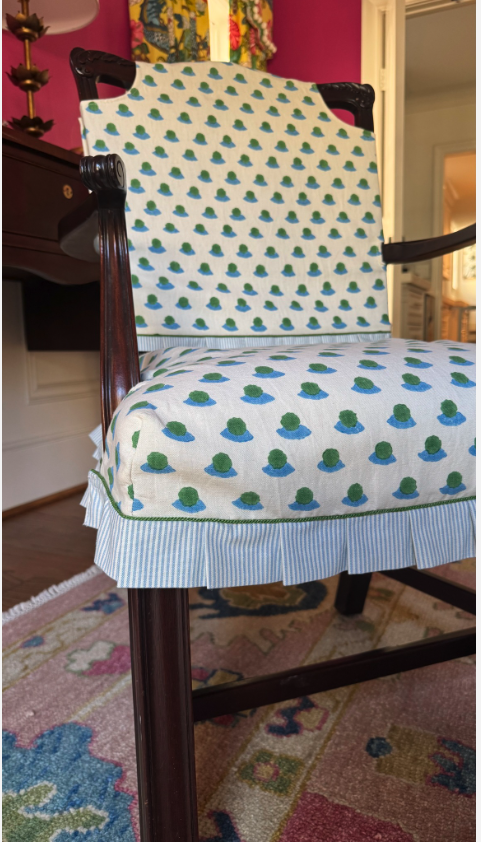
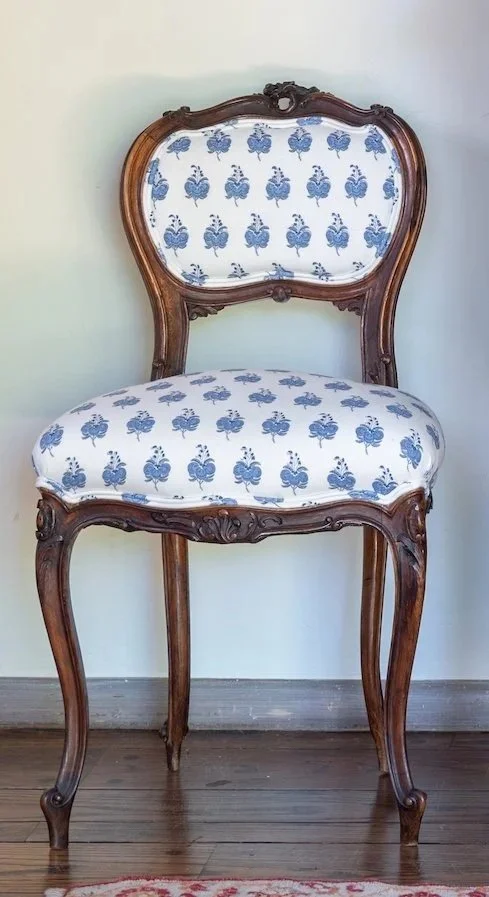
This may sound like a no brainer but if guests are uncomfortable, they aren’t going to spend a ton of time hanging out at the table after dinner. Upholstered seats or cushions make all the difference, and a dining room is a wonderful place to show off a great fabric. Performance fabrics have come a long way and now come in beautiful patterns and textures, so you don't have to choose between pretty and practical. Host and hostess chairs at the ends of the table are a fun place to use a contrasting fabric or a special detail like banding or a skirt. You can really play with chairs in the dining room whether it is bandings, pleats, piping, etc - have fun with this but be sure they are also comfortable!
Dress the windows
Window treatments soften all the hard surfaces in a dining room: the table, the chairs, the floors. They help the room feel finished and keep sound from bouncing around. Full-length drapery hung high and wide makes the ceiling feel taller and the windows look grander. This is the perfect spot for a pattern you love.
Make it personal
The dining room is one of the best places in the house for vintage and inherited pieces. It's a room built around gathering and tradition, so the sideboard from Aunt Joanie or the silver serving pieces that come out every Thanksgiving fit right in. They don't have to match the rest of the room. An antique hutch next to a modern table, or a set of mismatched vintage chairs around a newer table, gives the room character you can't buy all at once. I love it when a client tells me they have a piece that is special to them that they would like me to work into the design. That is what makes a room special, collected and unique to you and your family.
